Author: evaseto

  • Working with Film & Visual Media

    Working with Film & Visual Media

    The Anticolonial Lab Presents

    Working with Film & Visual Media

    with Clara Pérez Medina.

    Clara Pérez Medina (they/them) is a photographer, videographer, filmmaker, and doctoral student in Geography at UC Berkeley.

    Thursday March 6 2-4:30pm, Social Science Matrix Conference Room, 820 Social Sciences Building, UC Berkeley

  • The Power of Listening: Democratic Resilience in India

    The Power of Listening: Democratic Resilience in India

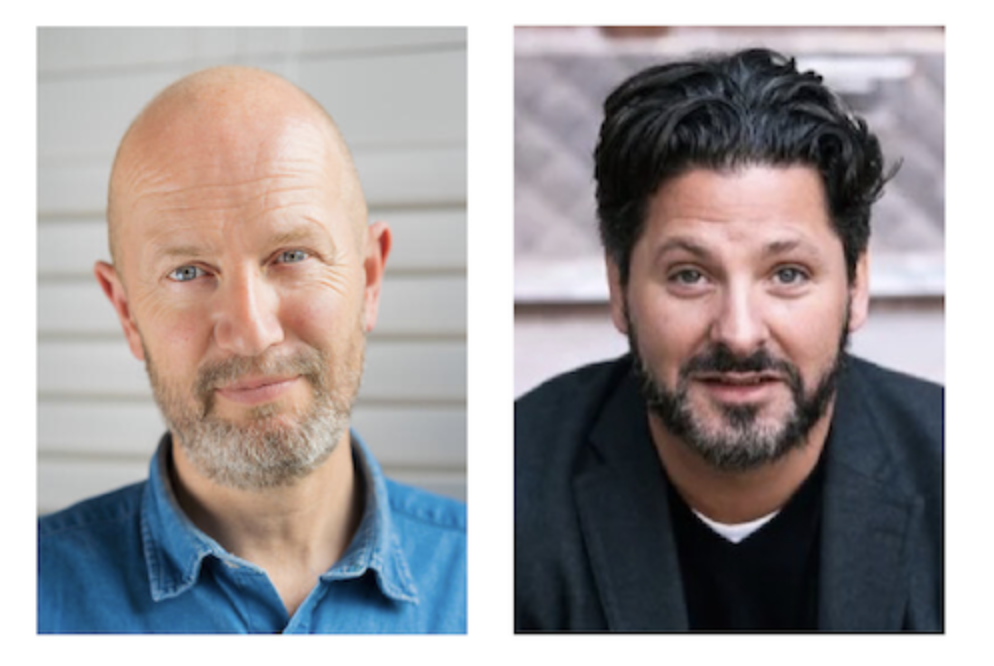
    We invite you to a talk by Varun Santhosh, an Indian National Congress party official who served as the party’s national vice-chairperson for the 2024 parliamentary election war room. He will speak on “The Power of Listening: Democratic Resilience in India.”
    📅 Date: Wednesday, 5 Feb. 2025
    🕒 Time: 12:30 pm
    📍 Location: Social Science Matrix (8th Floor, Social Science Building)
    Talk Description:
    India’s 2024 general elections mark a pivotal moment in the country’s democratic landscape. This talk explores contemporary democratic processes through the lens of grassroots movements and opposition strategies, focusing on the Indian National Congress’ nationwide campaigns: the 4,000 km Bharat Jodo Yatra from South to North and the 6,600 km Bharat Jodo Nyay Yatra from East to West. Offering an insider’s perspective, the speaker examines how these campaigns engaged citizens across the country through active listening, network mobilization, and strategic narrative-building. The discussion will highlight the interplay between public participation, political communication, and counter-narratives in modern India, shedding light on pathways for democratic renewal and transformation.
    Speaker bio:
    Varun Santhosh has been deeply involved with India’s Congress Party for over a decade. Most recently, he served as Vice-Chairman of the Indian National Congress’ National War Room during the 2024 parliamentary elections, overseeing campaign strategy and grassroots volunteer coordination. Previously, he was a senior staffer on the Parliamentary Standing Committee on Science & Technology, Environment, Forests & Climate Change. He also played a key role in organizing the Bharat Jodo Yatra led by Rahul Gandhi. He has worked closely with prominent MPs, including Jairam Ramesh and Rajeev Gowda. His published research focuses on election laws, electoral reforms, and public funding of elections.
    We hope you can join us for this session.
    Hosted by GDC – Fostering Democratic Elections in Diverse Societies Lab

  • Rural to Urban Governance Transition in Rajasthan, India

    Rural to Urban Governance Transition in Rajasthan, India

    In my project with Alison Post (Global Metropolitan Studies, Political Science), we’re exploring the effects of converting large villages from rural governance structures like panchayats to urban municipal institutions in Rajasthan, geographically the largest state in India. We are interested in understanding how conversion affects the nature of local politics and service delivery. So far, we have interviewed many state-level and local bureaucrats and politicians, including MLAs, chairpersons, and ward-level councilors. This provides insights into how rapid urbanization in India is affecting the character of local governance.

    We are at a preliminary stage of the work. As we move ahead, we would like to understand the effects of the transition from rural to urban local bodies on several levels. As villages become towns and cities, new infrastructure is needed, such as drainage, piped water networks, street lighting, and road infrastructure. Cities must also generate additional revenue via taxation to fund this infrastructure. Do cities mobilize more revenue after converting from panchayat to municipal status, and how does that help the city’s infrastructural needs? Moreover, electoral dynamics also change as cities gain urban status: unlike in the cities, candidates fight elections without a party’s nomination. Does this transition affect the kind of politicians who gain access to the municipal office, and with what consequences? We hope to answer these questions in our future fieldwork and data analysis.

    ~ Sharik Laliwala is a third-year Ph.D. student in political science at UC Berkeley. He is interested in studying residential segregation, ethnicity, city politics, and municipal governance in India.